What are Common Sales Objections?
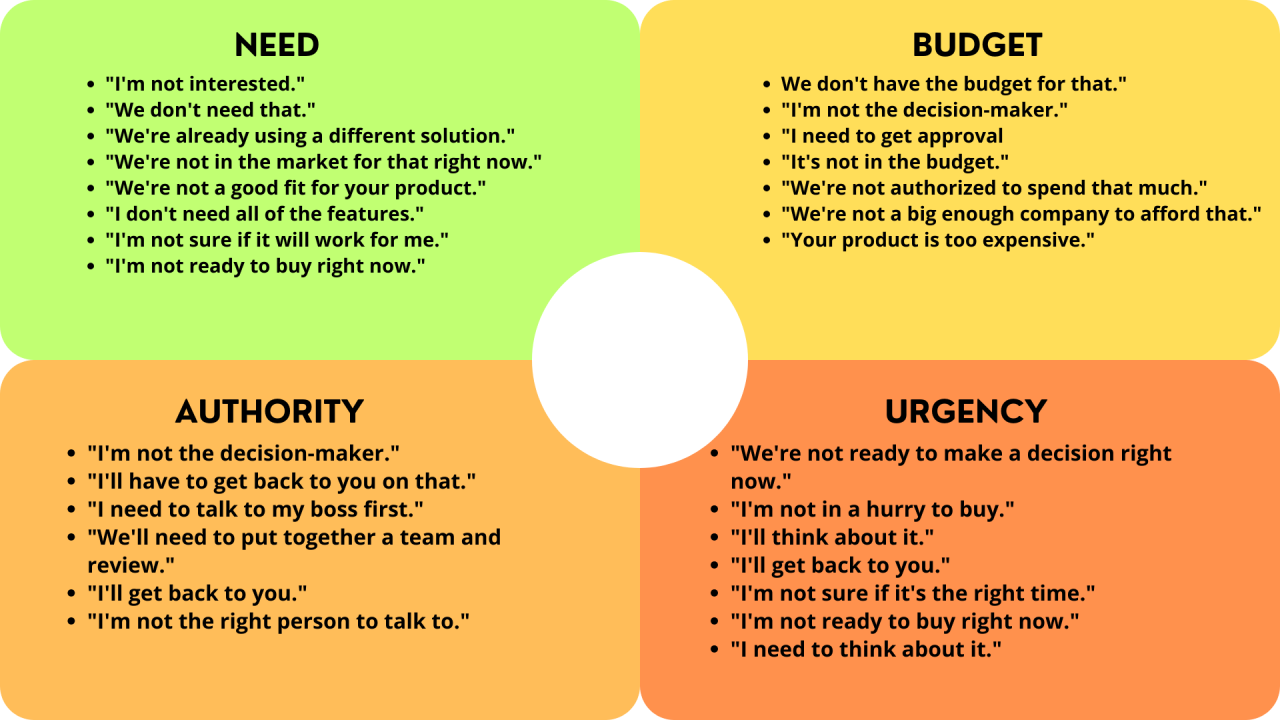
Even after more than 15 Years of field sales experiences, and helping train thousands of sales professionals my sales closing percentage is between 15-30 %. Sales closing is no joke and sales objections are real. I am pretty sure sales objections themself are a part of the natural sales process. It will be a wise choice for an organization to equip their sales team with what can be the common sales objection and what is the reason behind it and how to categorize them. Below are 28 common sales objections and it should be enough for several closing. To make it easier to understand and find solutions to overcome them, I separate them into four categories which highlight the reason behind the objection itself.
How Can Sales Objections Be Categorized?
Need
- "I'm not interested."
- "We don't need that."
- "We're already using a different solution."
- "We're not in the market for that right now."
- "We're not a good fit for your product."
- "I don't need all of the features."
- "I'm not sure if it will work for me."
- "I'm not ready to buy right now."
Budget
- We don't have the budget for that."
- "I'm not the decision-maker."
- "I need to get approval
- "It's not in the budget."
- "We're not authorized to spend that much."
- "We're not a big enough company to afford that."
- "Your product is too expensive."
Authority
- "I'm not the decision-maker."
- "I'll have to get back to you on that."
- "I need to talk to my boss first."
- "We'll need to put together a team and review."
- "I'll get back to you."
- "I'm not the right person to talk to."
Urgency
- "We're not ready to make a decision right now."
- "I'm not in a hurry to buy."
- "I'll think about it."
- "I'll get back to you."
- "I'm not sure if it's the right time."
- "I'm not ready to buy right now."
- "I need to think about it."
How Can Sales Reps Overcome Objections?
Below are some recommendation for each reasons and how to influence them
How to Address "Need" Objections?
○ Need: A sales rep can influence the prospect's perception of their need for the product or service by providing them with information about the benefits of the product or service and how it can solve their problems. Some customers don't even know they need our service or not. It is sales rep job to show them
How to Address "Budget" Objections?
○ Budget: A sales rep can influence the prospect's budget by providing them with information about the cost of the product or service and how it compares to the cost of other solutions or come up with different packages and payment terms
How to Address "Authority" Objections?
○ Authority: Make sure Sales Rep identifies the decision maker & book a meeting. A sales rep can influence the prospect's authority to make a decision by building a relationship with the decision-maker and demonstrating the value of the product or service.
How to Address "Urgency" Objections?
○ Urgency : Sales reps can influence customer by demonstrating how much more benefits customer can get if they commit now or explain discount/ promotion plan
Frequently Asked Questions
Q: What is a typical sales closing percentage? A: A typical sales closing percentage is between 15-30%.
Q: What are the four main categories of sales objections? A: The four main categories of sales objections are Need, Budget, Authority, and Urgency.
Q: How can a sales rep influence a prospect's perception of need?
A: A sales rep can influence a prospect's perception of need by providing information about the benefits of the product or service and how it can solve their problems.
FAQ
Q: What makes Sai Han Linn's Sales Training methodology effective for Myanmar and Southeast Asian B2B markets? A: The Training methodology is built entirely on field evidence from Myanmar's dealer economy. Sessions focus on compassionate selling, cash-down culture architecture, and the trust dynamics governing last-mile B2B transactions. It represents the best sales training in Myanmar because it was built from the market, not applied to it.