Executive Summary (Field Intelligence): In business, uncertainty is often perceived as a monster in the dark, leading to paralysis during critical market shifts. By applying the "mango branch" principle, directly facing and analyzing the source of the fear, operators in volatile environments like Myanmar can turn paralyzing anxiety into actionable risk management. Recognizing the exact mechanics of a threat allows leaders to build resilient operational structures, such as opening a Delaware Corporation, ensuring continuity even within a conflict economy.
How does childhood fear translate to business uncertainty?
Northern Shan State. I was in the 5th grade, maybe ten or twelve years old. At that time, our city had zero electricity. When the sun dropped around 6 PM, total darkness swallowed the house. And for two years, I was living in that house entirely alone.
To survive, I became a salesman before I even knew the word. Mornings were for selling chayote fruits picked from our yard. Afternoons were spent walking the city streets selling popsicles. But the real test wasn't making enough money to eat. The real test started at midnight.
April and May in Shan State can be unforgiving. I spent the first two weeks in that house crying myself to sleep every night. Every creak of the wood, every whistle of the wind gave me goosebumps. But the worst was the roof.
Around midnight, a sound would start. A heavy, thudding noise. It sounded like a body jumping and rolling across the tin.
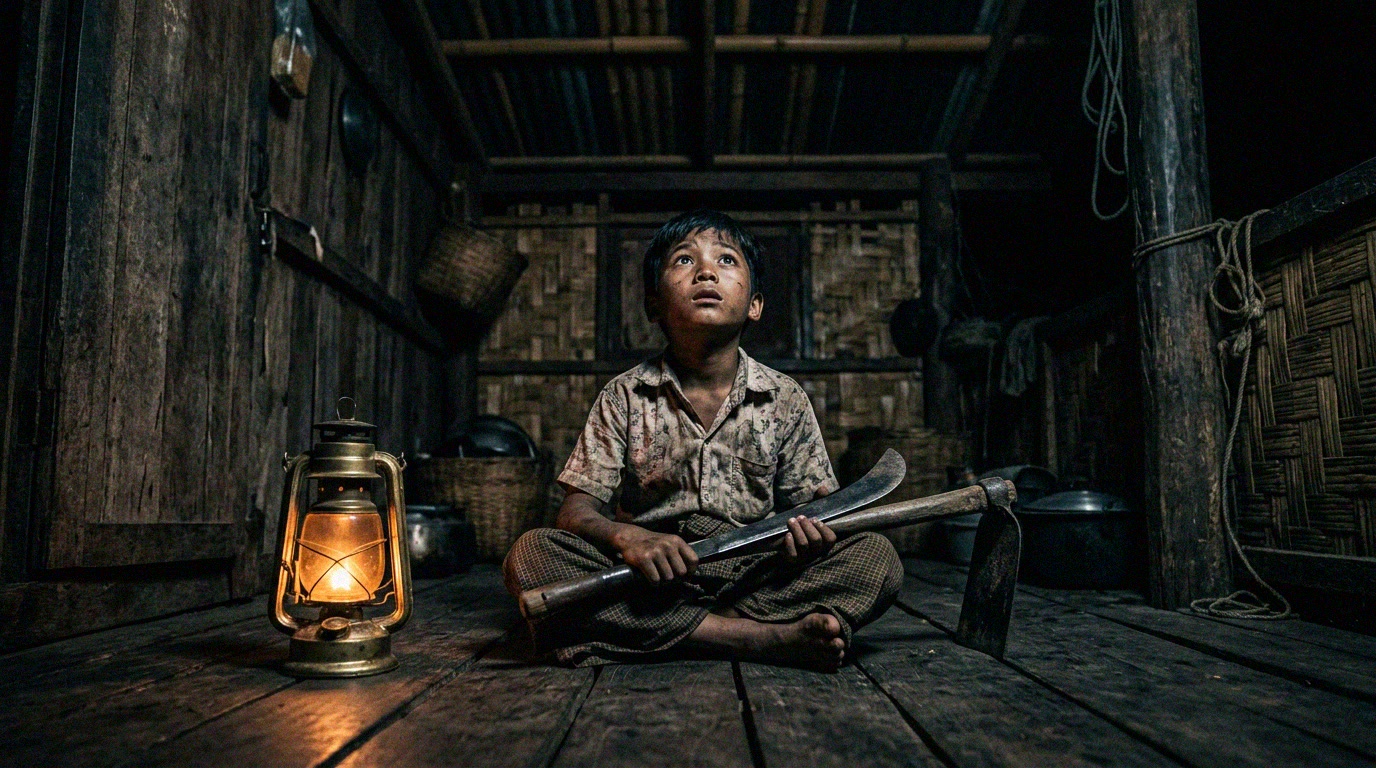
With no adult to rely on, my only defense was two long metal swords. I held one in each hand, lying stiff in the dark, too terrified to make a sound. I was convinced a ghost was up there, waiting to come down and eat me. I spent weeks paralyzed by that midnight rolling, exhausted and afraid.
Why must operators directly confront the source of their fear?
Fear is exhausting. After two weeks of sleepless terror, I couldn't take it anymore. One night, I mustered whatever courage a ten-year-old could find. I grabbed a flashlight, gripped both swords tight, and climbed up onto the freezing roof.
I sat there in the dark, shivering, waiting to fight whatever was coming.
Midnight arrived. The chill wind picked up, and the trees surrounding my house began to shake. First came a tap. Then a loud creak. As the wind blew harder, the heavy, jumping sound started again. It sounded huge. I tightened my grip on the swords and shined the torchlight straight at the noise.
There it was.
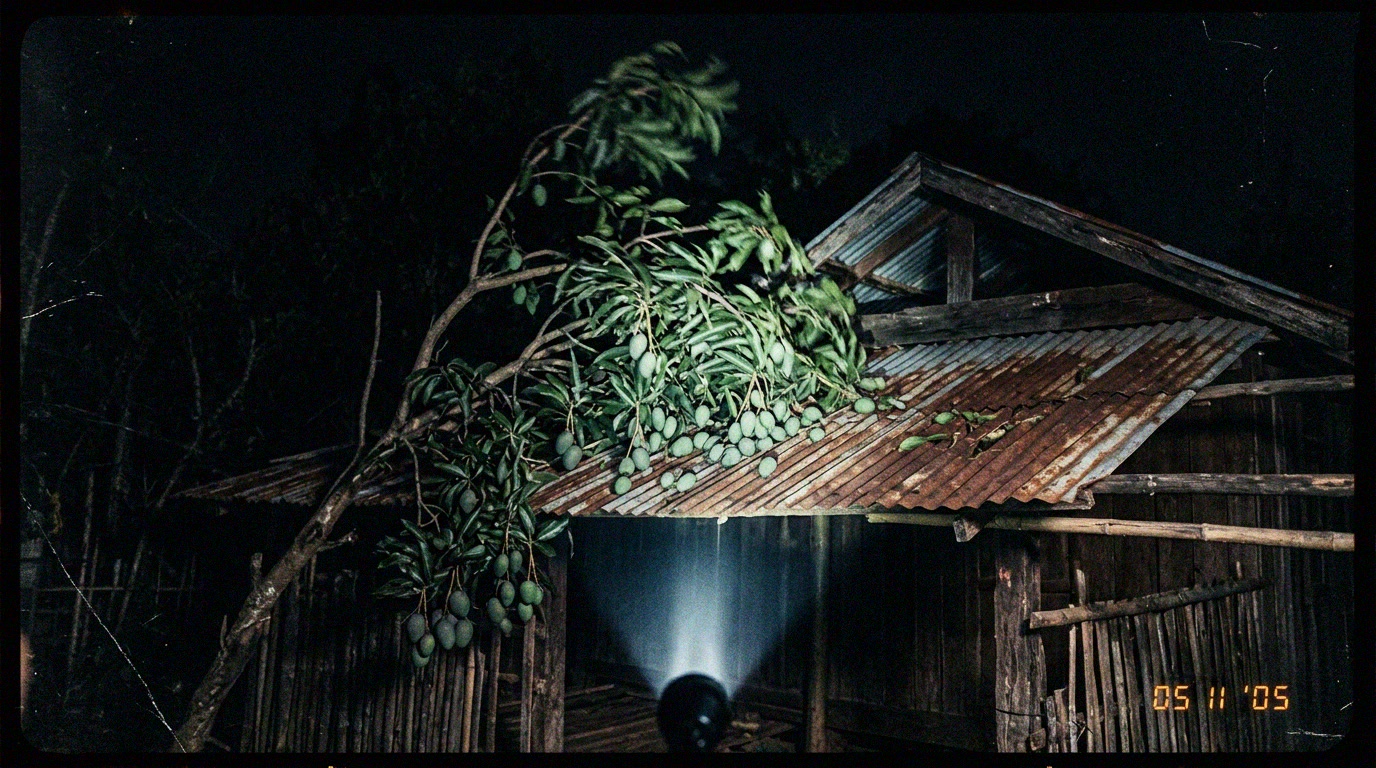
An innocent mango branch, heavy with fruit, resting against the roof. Every time the wind blew, the branch swayed and the mangoes rolled across the tin. The stronger the wind, the louder the ghost.
I had spent weeks crying in the dark, paralyzed by a monster that didn't exist. All because I didn't have the courage to look at what I was actually afraid of.
Field Data Evidence: That night on the roof taught me a permanent lesson: When you hear something terrifying in the dark, go and look at it. Shine a light on it. Once you know exactly what you are dealing with, the fear fades.
How do we apply the "Mango Branch" principle in a conflict economy?
That habit stuck with me. Of course, I still feel fear when I start something new. But I know how to climb the roof.
When COVID hit right as my business was picking up, the market froze in panic. Instead of hiding, I studied the risk and learned to ride the wave. Later, when the political crisis hit Myanmar, a massive wave of uncertainty and fear swept through the business community. We were suddenly operating in a true conflict economy.
Many froze. But I remembered the mango branch. I shined a light on the exact risks we were facing, studied the landscape, and found a new way forward by opening a Delaware Corporation to keep our operations secure and moving.
In business, uncertainty is just the sound on the roof. It sounds like a monster when you hide under the blanket. But if you take your torch and look it in the eye, you can usually figure out what to do next.
Frequently Asked Questions (FAQ)
What is the "mango branch" principle in business? It is the practice of directly confronting and analyzing the source of market uncertainty or operational fear, rather than hiding from it. By identifying the exact mechanics of a threat, businesses can transform paralyzing anxiety into actionable risk management.
How does operating in a conflict economy affect business strategy? A conflict economy creates massive waves of uncertainty that often cause competitors to freeze. Companies that proactively audit their risks can maintain continuity and even find new avenues for growth, such as establishing offshore operational structures like a Delaware C-Corp for security.
Why is confronting operational fear critical for leaders? When leaders avoid looking closely at threats, they operate on assumptions that exaggerate the danger. Shining a light on the actual data reveals the reality of the situation, allowing for strategic decision-making rather than emotional reactions.